Thursday, November 16, 2006

IBM's Todd "Turbo" Watson on v-Business

From his bio you can tell that Turbo is a player. "He later led the development of the IBM e-business Web site, and most recently has been responsible for helping drive the strategy and optimization of the IBM Software Group Web presence."

Tuesday, Turbo took some time to write up his thoughts on the recent IBM announcement to invest $10m in a 3D world initiative.

From his post:

"For those of us who have been early advocates inside Big Blue around the notion of "v-business," particularly in Second Life, this is very exciting news, as it clearly indicates our own bullishness about the promise of virtual technologies in business, educational, medical, and other organizations that can benefit from a more visual Web environment.

Just as we did in the early days of e-business and Linux, our goal is to build a community and drive the business opportunities for virtual business, or "v-business."

Having been at an Internet World press conference where IBM's commitment to "e-business" was announced over a decade ago, I'm very excited to see a similar commitment to these emerging virtual worlds, and to see them announced very much in the spirit and energy this new frontier presents to businesses and organizations around the globe."

Labels: , , , , ,

Monday, November 13, 2006

Second Life Stories: Nov 13th, IBM, Amazon and Sun

So I couldn't keep up with everything last week and need to make sure I have time for everything this week. I may do the "Second Life Stories" as a weekly catch all for things I missed. We'll see.

CNN/Fortune: "No, Second Life is not over hyped"

"Yet Second Life may be more important, longterm, than even this much publicity would suggest. That's because what it really may represent is an alternative vision for how to interact with information and communicate over the Internet.

So far Second Life is way too hard to use. The people who do best there are still techie types. It requires a fairly powerful computer. You have to download a special software application to use it. It can't be used in many corporate offices (like mine at Time Inc., for instance).

But Second Life is important as much for what it represents as for what it concretely offers today. Looking at Second Life makes me realize just how much the Web, wonderful and useful as it is, still mimics a print model.

Second Life goes much further. It took a radical approach to design from the beginning. It offered itself as a mere platform for the creations of its occupants. Essentially everything seen inside the software today was created by its users."

Information Week: "IBM gets a Second Life"

"IBM is set to invest $10 million over the next twelve months to increase its presence in the market for technologies that enable so-called virtual worlds such as Second Life, a 3-D Web environment in which people from various walks doff their everyday identities to assume online alter egos, a company spokesman said Friday.

"Just as AOL and other early Internet services were early entry ways into the largely undeveloped World Wide Web, Second Life, other virtual worlds, and massive, multi-player game environments are the precursor to a 3-D Internet," says the spokesman. IBM wants to create 3-D business environments that mirror Second Life's interactivity and sense of immersion. The company envisions scenarios under which, say, a team of healthcare researchers from around the world could enter a virtual meeting room to tackle a disease outbreak.

Silicon.com: "Big Blue expands into Second Life"
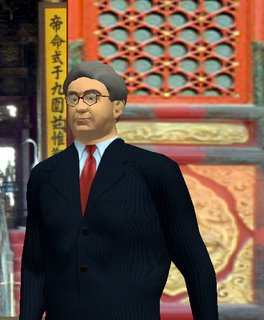
"Chairman and chief executive Sam Palmisano is set to visit Second Life on Tuesday, following a "town hall" meeting with some 7,000 employees in China, and speak with the more than 250 IBM employees on one of the company's virtual islands.

The company is looking to build a private 3D intranet where it will be able to discuss sensitive business information. It is moving to champion what it calls "v-business" - short for virtual business - just as it championed "ebusiness", or electronic business, during the dot-com boom.

Sandy Kearney, IBM's director of emerging 3D internet and virtual business, said: "We always ask the question, 'if you knew 20 years ago what you know about the web today, what would you do differently? The web took decades. This will likely take half that time."

Reuters: "IBM accelerates push into 3D virtual worlds"

"Big Blue has already established the biggest Second Life presence of any Fortune 500 company. It is also looking to build a 3D intranet where its clients will be able to discuss sensitive business information.

The company’s move into virtual worlds is due in large part to the efforts of its “multiverse evangelists,” Ian Hughes (Epredator Potato) and Roo Reynolds (Algernon Spackler in-world), who said last month that IBM wanted to make “v-business” a priority just as it championed “e-business” during the dot-com boom.

“The essence of ecommerce today is built around the idea of catalogs. That’s very useful, it fits with the idea of Web pages and catalog pages, but most people don’t think of shopping in terms of catalogs and pages, but in terms of stores that they go into,” said IBM chief technology strategist Irving Wladawsky-Berger (Second Life name Irving Islander).

“In addition to our desire to work more closely with Linden Labs, we’re exploring how we can work with many virtual world players, including companies like Multiverse and Bigworld Technology, as well as open source platforms like Uni-Verse.org,” the spokesman said in an email. “IBM’s ultimate aim is for inter-world integration, instead of separate islands of virtual worlds, where you cannot cross over from one to the other in a consistent way.”

Second Life Insider: "Quite achievements"

"That's got to be one heck of an island that they've got going on there, I must say. 250 on an island is quite a stretch. 250 on a four-sim corner is still a stretch. Either IBM is getting much better toys, or they're planning to do this in shifts."

Information Week: "Second Life residence build stores around Amazon.com"

This one is important. Bezos is an investor in Linden and SL uses S3.

"Whether Amazon.com becomes a fixture within Second Life will be left up to its members, who build the revenue-sharing virtual stores and write the scripts needed to integrate with Amazon.com's Web services for third-party retailers. Second Life residents do a total of about $6 million worth of business a month, up from about $2 million a few months ago.

"Our strategy is to provide tools that let residents create and enhance their own experience in Second Life, and to let them decide what can be done and how to do it," says Glenn Fisher, director of marketing programs at Linden.

Life2Life (SLurl) is one of the retail projects built around Amazon.com's product services. Second Life residents Tabatha Hegel and Hugo Dalgleish, their names in the online world, are using the search and shopping tools they've created in at least four locations."

Millions of Us: "Sun and open source java Q&A"

"I’m really excited to announce that Sun’s Tim Bray and Simon Phipps alongside Mark Shuttleworth will be hosting a Q&A session in the Second Life Sun Pavilion this coming Monday, November 13th, at 1:00 PM PST. The Q&A session is to follow an announcement that morning by Sun via webcast and other media channels. We will be broadcasting the webcast at the Sun Pavilion to kick off the Q&A session.

A bit more about the hosts, as these guys have really interesting backgrounds: Tim Bray is Sun’s Director of Web Technologies and a co-inventor of XML and Simon Phipps is Sun’s Chief Open Source Officer. Joining them will be Mark Shuttleworth, the Founder of the Ubuntu project (and one of my favorite Linux distributions), and odd tidbit, the version of Linux I used to run (and test) the Second Life Linux Alpha when I worked at Linden."

Labels: , , , , , , ,

Monday, November 06, 2006

Second Life Stories

Another round of articles on Second Life.

NPR:

"For those of you immersed in "first lives," a virtual world is an interactive Internet environment which can be accessed by multiple users. Not all of these worlds are games. In Second Life, some people have businesses that generate thousands of dollars in real money, some socialize, and some attend events that blur the line with the real world."

BBC:

"IBM used to talk about taking bricks and mortar companies and turning them into e-businesses. Mr Reynolds (eightbar) now talks to them about the possibility of becoming v-businesses.

"It's not a comparison between doing it in real life and online," said Mr Reynolds. "But not everyone can afford to go to Wimbledon, but what they might be able to do is share some online experience in a virtual world."

IBM is already hosting meetings in Second Life, although because it does not own the servers that it runs on, attendees cannot discuss sensitive company information, such as patents."

NYT Travel Guide:

"It may have been virtual, but it sure felt like a Friday night. Except that I woke up at home, in my own bed. The great thing about weekending in Second Life is that you don’t need a place to crash — you just log off. Neither did I have a hangover — a surprise since Urge Gainsbourg had fallen off his barstool after drinking too much Duff."

The Street:

"To Jaffe, entering SL is not just watching a civilization birthed. "You're actually a part of it," he says. "I tell marketers it's not a reach-play. Second Life is about a very special group of people that are opinion leaders, innovators and early adopters. These people are pioneers just by being, as opposed to by doing."
The Street 2:

"On the whole, a majority are accepting commercial businesses like Nissan," said Giff Constable, vice president of business development with Electric Sheep, the company hired to construct Nissan's virtual home. "A handful of people are worried about what brands are coming into Second Life. It's all about whether the company is providing something fun to the community, like the Nissan driving course does."

Eric Rice:

"This is Second Life’s problem (and many others’ worlds). No one is there to show you. This is also a similar problem of the YouTubes of the world. EVERYthing is there. Who can show you the best? Is a filter better than a network?

In Second Life, regardless of field of industry, I see a much higher retention of people and an easier grasp and understanding of the world when a guided hand is there. When I see the negative experiences, I’m almost confident in my speculation that they went at it alone."

Nussbaum On Design:

"3- Mining intentionality has to be a big part of your reason for going to Second Life. Finding out what people really want when given opportunities is a key factor for entering."

Business Week:

"Opening a virtual office, selling and market-testing digital replicas of products, and asking employees to create 3D online personas or "avatars" are quickly becoming action items at companies seeking to brand themselves as hip, or simply wanting to reach Second Life users, nearly half of whom are female and whose median age is 32.

This has made the online world a hot advertising outlet for brands ranging from Warner Bros. (TWX) to Adidas (ADDYY) to Microsoft (MSFT). While advertising's traditional media seem to be losing eyeballs, the population of Second Life is growing at 35% per month and its economy at 15% per month. Or in terms of annual growth rates, the population is growing at 978% and the economy at 270% to date for 2006."

Second Life Insider:

"Some of the marketing agencies and businesses will deal with Second Life at arm's length, still fumbling one handed with your bra, trying to get it off while you sigh and look through the foggy windshield at the moon. Others, well - your friend since Beta may work for a large marketing agency that's looking for ways to leverage Second Life.

Personally, I think I'd rather have the latter than the former. A virtual world's sense of 'presence' certainly helps to function as an effective leveler for everyone who comes to experience and study that world. We're all better informed, at least insofar as we want to be. We can only hope that we'll see fewer of the same mistakes repeated."

Labels: , ,

Tuesday, October 24, 2006

IBM: v-Business

Adam Reuters reports on IBM's continued push into Second Life.

From the article: (photos by Michel Leblanc)

"Computer services giant IBM has plunged into Second Life at the urging of its “metaverse evangelists” Roo Reynolds and Ian Hughes, using it as a location for meetings, training and recruitment. But the company is also eyeing revenue opportunities that could have it vying with Second Life design firms to bring real-world businesses into the virtual realm.

, Ele

“E-business was a strategy for us, why not v-business?” said Reynolds, known in-world as Algernon Spackler, at the “My So-Called Second Life” conference in London on Tuesday. “I don’t mean to be competitive with Rivers Run Red or Electric Sheep, but just like we set up a bricks and mortar business online, we could integrate a company’s services in a virtual world.”

"Integration with services, integration with data — exactly what we helped people do back in the days of e-business, that’s sort of what I envision us doing,” he said. “Mind you, I’m an evangelist, not a strategist, but if I had to guess that’s where we’re going.”

IBM has embraced Second Life to an extent unmatched by any other major company — it has more than 230 employees spending time in-world, and it owns some half-dozen islands. Some are open to the public, but most are private, with restricted access for the public."

See also:
IBM's Secret Island
IBM's R&D in Second Life

Labels: , , , , , , , , ,

Thursday, May 18, 2006

Making Money in Second Life

A host of articles about Second Life and the real business opportunities it presents.

My Virtual Life:

"We can and should view synthetic worlds as essentially unregulated playgrounds for economic organization," notes Edward Castronova, an associate professor in telecommunications at Indiana University at Bloomington and author of the 2005 book Synthetic Worlds: The Business and Culture of Online Games.

That's the mission of a secretive Palo Alto (Calif.) startup, Seriosity, backed by venture firm Alloy Ventures Inc. Seriosity is exploring whether routine real-world responsibilities might be assigned to a custom online game. Workers having fun, after all, likely will be more productive. "We want to use the power of these games to transform information work," says Seriosity CEO Byron B. Reeves, a Stanford professor of communications.

There's no denying the explosion of media, products, and services produced by users of these virtual worlds. IGE Ltd., an independent online gaming services firm, estimates that players spent about $1 billion in real money last year on virtual goods and services at all these games combined, and predicts that could rise to $1.5 billion this year. One brave (or crazy) player in the online game Project Entropia last fall paid $100,000 in real money for a virtual space station, from which he hopes to earn money charging other players rent and taxes. In January inside Second Life alone, people spent nearly $5 million in some 4.2 million transactions buying or selling clothes, buildings, and the like."

From CNN Money:

"Anshe Chung buys up Second Life land, paying Linden Lab roughly $200 a month for each 16-acre plot, plus a one-time fee of $1,250. Then she develops the land, using Photoshop to add rivers, mountains, and forests. Sometimes she hires subcontractors to improve the acreage by designing or building houses. Then she sells or rents to other Second Lifers, who pay good money to inhabit her creations. As in the real world, prices vary by location. But often someone will pay Anshe $100 up front to buy a one-acre plot, plus $20 a month in land tax. In a case like that, Anshe makes $112 in her first year. She's done more than 10,000 various real estate deals. "I'm like Wal-Mart," she says. "The margins are small, but the volume isn't."

Second Life is still an emerging nation, and Anshe believes it's rife with moneymaking opportunities."

Wired "Making Money in Second Life":

One they've perfected their look, Second Life immigrants who want to build virtual homes often purchase or rent land from entrepreneurs like Tony De Louise, from Long Island, New York, who gave up the meatspace rat race to become an online landlord. "I've worked two to three jobs most of my life," said De Louise. Now, "instead of coming home at 10:30 at night, I'm home and can help my wife put our new baby to bed."

De Louise and business partner Alice McKeon own d'Alliez Island Rentals, and now lease land on a chain of in-world islands they own. They pay Linden Labs $1,250 for each island, plus a $195 monthly maintenance fee. Renters in turn pay from $15 to $75 for average-size land parcels."

Labels: ,