Wednesday, April 18, 2007

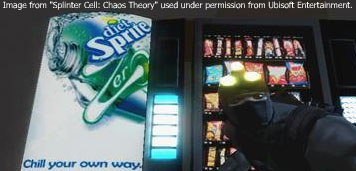
In-game ad spends

From eMarketer:

"Globally, it's estimated that video game advertising will grow nearly 23% a year over the next five years. The main reason? Everyone is playing."

From the MIT Adblog:

"eMarketer projects that $295 million of the 2007 total will be spent on in-game advertising and that spending on advergaming (the creation of games for the purpose of promoting a brand) will reach $207 million. By 2011, the balance between the two will have shifted significantly. US spending on advergaming will climb to $344 million in 2011, but US spending on in-game advertising will climb faster, reaching a total of $625 million that year."

Labels:

Monday, January 22, 2007

Google set to Aquire Adscape Media

The WJS is reporting that Google is set to acquire Adscape Media, and In-game ad insertion company.

From the stub: (subscription required)

"Google Inc.'s efforts to broker advertisements beyond the Web could soon expand into ads that appear in videogames.

The Mountain View, Calif., company is in talks to acquire Adscape Media Inc., a closely held San Francisco company whose technology allows for the delivery of advertising over the Internet and placement within videogames, according to people familiar with the matter. They added that a deal could be reached as early as next week.

While the possible terms of a deal aren't known, Microsoft Corp. last year acquired Massive Inc., a company that delivers in-game ads, for close to $200 million."

From Adscape:

"As the pioneer in dynamic in-game advertising, Adscape Media has established itself as the most innovative company in the space. With the first available dynamic in-game advertising solution, Adscape Media delivers dynamic advertising content to on-line enabled game platforms securely and verifiably.

Relying on patented technology developed in 2002, Adscape Media dynamically serves advertising into the virtual worlds of games and reports in a privacy-protected fashion on the actual presentation of the ads."

Web design note: flash sites that don't let you link directly to content pages or use the back button are not so good.

Labels: , ,

Monday, January 15, 2007

News Corp's Peter Chernin: No Money in UGC

Peter Chernin sees a big story for online advertising in 2007 but sees little potential to monitize user generated content.

The Hollywood Reporter:

"News Corp. president and chief operating officer Peter Chernin said Tuesday that he expects his company to exceed its goal of $500 million in digital revenue for the current fiscal year and that online video advertising has the potential to be "the single best (business) story" for media companies in 2007.

Speaking at the 17th annual Citigroup Entertainment, Media and Telecommunications Conference in Las Vegas, Chernin said online ad rates have started to become significant at CPMs of $25-$30.

But he warned that industry watchers might overestimate the business opportunity behind user-generated content. "There is very little opportunity to monetize user-generated videos because advertisers are not always comfortable with their content, and "there is no scarcity value," Chernin argued. "If you put an ad on a minutelong clip of someone falling off a skateboard, people can find that (video) everywhere."

Business Week:

"That made me sit up and think. I have heard this from advertisers about YouTube, which explains why they're scurrying to clean up their content. But here's a lot more validation from someone who actually runs one of these sites and has a lot in this game. Chernin said that MySpace has about 2/3rds to 3/4rds as many video downloads as YouTube, the Hollywood Reporter writes.

It sounds like he's making a distinction between user generated content and social networking. But you have to wonder how willing advertisers are to climb into the wild and woolly world of social networking, beyond the places like the home page which Ad Age recently reported sell for $1 million per day. "

Labels: , , , , ,

Friday, January 05, 2007

WSJ on Turner's New Media Strategy and Super Deluxe

From yesterday's subscription required article, we get some more insight into the Turner new media strategy for '07.

From the article:

"In recent months, the team has launched ACC Select, a subscription site which airs Atlantic Coast Conference basketball games along with other college sports; CNN Pipeline, a subscription-based online news video service; and another such service, Very Funny Ads, which shows humorous television commercials. This month, the company plans to launch SuperDeluxe, a site with original short-form comedy clips.

"We're building businesses outside our core that allow us to compete for other pools of money," says Turner Entertainment Group President Mark Lazarus. Turner's cable networks are performing better than those of many rivals, but the gradual decline in cable advertising growth to just 3% in the first nine months of 2006 from more than 25% annually a decade ago, has forced the company and its rivals to look hard for other revenue streams."

And some more info from our friend David Rudolph:

"Late last year, David Rudolph, the Turner executive who heads the Atlanta development team, challenged his colleagues to conceive and implement a new business concept in 30 days. "The goal was to say within the company that it doesn't take years to go from idea to launch," he says.

Mr. Rudolph wanted to see if it would be possible to film college athletic events and create a "TV-like experience" on the Web on a production budget of $1,000 per game. The idea was to focus on sports that aren't covered by broadcast and cable networks but have a small and loyal following. Using off-the-shelf video components, the team assembled a game kit with four cameras for about $35,000. In May, ACC Select covered its first event, a Georgia Tech baseball game. The production cost: just under $1,000.

The service launched in September and now covers about 100 live events per month at a cost of about $1,200 per game. Users pay about $5.95 per month or $3.95 per game to watch."

Labels: , , , , , ,

Tuesday, December 05, 2006

EA: $5M in In-Game Advertising over the Holiday Season

The folks at the Emerging Media Lab point to a WSJ (subscription only) article about EA and In-Game advertising. Spokesperson Jeff Brown talks about the potential holiday revenue.

From the post:

"Based off what Brown is saying, EA expects to pull somewhere between $4 million and $5 million in advertising revenue from placements within its “Need for Speed: Carbon” racing game. Just under half of that revenue is expected to come from dynamic advertising placements powered by recently-Microsoft-acquired Massive Interactive.

While video game prices have been increasing, they haven’t matched pace with production costs, so advertising revenue, especially if it’s going to account for nearly half the cost of producing a game, is a really attractive prospect for a lot of developers."

Labels: ,

Friday, October 27, 2006

crayon

crayon launched yesterday.

From the press release:

"crayon, the world's first dedicated New Marketing company, is open for business from today in the real world and, simultaneously, in Second Life, the three-dimensional online digital world.

crayon is a different kind of company that integrates the best of the consulting, agency, advisory, thought leadership and education worlds - a mash-up, in new marketing terms.

"The world has changed, but marketing, advertising, and public relations have not," said Joseph Jaffe, author of the bestselling book Life After the 30-Second Spot (Wiley) and crayon's President and Founder. "There is no question that the influence organizations can achieve through traditional marketing, advertising and PR is fading fast."

crayon will help marketers, advertisers and public relations professionals better understand the tremendous changes, challenges and opportunities in today's dynamic and complex world of fragmented attention, increasing consumer control and hardening attitudes towards marketing communication.

"We're not interested in reams of data that says the world has changed. We get it," said Maarten Albarda, Director Media & Communication Innovation, The Coca-Cola Company. "crayon is not only focused on talking about what comes next, but moreover putting the ideas and promises of new marketing into action."

The launch party: CC Chapman

"Have you ever been in a stage production? The rush of energy that fills backstage just before you start. Little things go wrong. Last minute fixes. Mayhem. Crazy times that no one will ever see because they are behind the curtain?

That is what makes any live event special in my eyes. The stuff that is never seen. Sure, we had some of that today at the crayon launch, but I would of had it any other way."

Adrants:

"The riff is just typical early adopters versus late entry capitalists bent on following the eyeballs wherever they may be. It's happening with MySpace right now and people are leaving. It will happen with Second Life too. It's just too easy in this digital world to move somewhere else where marketers aren't. It's your typical game of cat and mouse.

If marketers don't tread carefully, fully understand what they are getting into, converse with and understand clearly the mindset of the people who live in the world they are entering, a disasterous backlash will occur and all parties will lose."

From the comments: Shel Holtz

"We are NOT a Second Life marketing company. We are a marketing company that has its headquarters in Second Life. It makes sense to us, since I'm in San Francisco, Joseph's in Connecticut, C.C. is in Boston, Neville's outside of London, and Chris is in New York. Should we meet via teleconference? Second Life is simply the best solution for us to function virtually yet still be able to meet face-to...er...avatar-to-avatar."

Mish:

"Jaffe said this at last week's conference and reiterated it at the launch, "What’s the next big thing? It is here today, it was here yesterday. Do it now while you can." Oh, how he is sooo right."

Labels: , , ,

Wednesday, October 11, 2006

Agencies Marketing to Avatars

Second Life has built up quite a buzz in the past several months.

AdWeek: "Agency Avatars"

"BBH, like Burnett, sees the Second Life investment as a way to enhance the agency experience. "It's a much more exciting way to share work," says Rogers. "You can e-mail a jpeg and take a look at it on your computer and then e-mail your colleague back, but the experience is a bit flat. Here you can look at it and talk about it in real time."

Bottom line, say these agency execs, having space on Second Life is an investment in their futures. "As we move from an ad-centered to an ideas-centered world, my job is to focus the agency on creative and big ideas," Tutssel explains. "It's going to be a great breeding ground for ideas. And our currency exchange is ideas."

Brand Channels: "Virtual Worlds: The Next Realm in Advertising?"

" What do Major League Baseball, Coca-Cola, Wells Fargo, the W Hotel and the American Cancer Society all have in common? They all use a virtual realm to reach out to potential customers and supporters in novel ways. Today, traditional media captures less attention from the younger generation—including the young at heart! New venues that address this demographic are evolving.

What is the real value of advertising in this new virtual world? First, consumers have the ability to experience things not currently possible in the real world. Product trials in virtual settings provide a low-risk environment for testing features and benefits. You can hire avatars to be product ambassadors and answer common questions. Also, you can demonstrate your 3D product or service in use. Live video and jpegs can add to the experience to help educate the user. In some cases, live feeds such as the Atlantis Shuttle launch can be viewed in some virtual settings."

AdAge: "Video Games Now a Social Experience"

"Social-networking sites are grabbing all the headlines about what's new in digital media, but new research from Nielsen Entertainment shows that video games are increasingly being used as a way for consumers to meet and bond with fellow players.

Marketers spent $56 million last year on in-game advertising and product placement, according to research firm Yankee Group. Yankee expects that number, which includes ads placed in both online and console games, to reach $730 million by 2010. "

Labels: , , ,

Monday, October 02, 2006

Business Week: Online Media's Appeal

Business Week looks at why internet video upstarts are receiving so much attention.

From the article:

"As the Internet snaps to life with homemade movies, TV shows, and other forms of video, companies that offer online video are seeing the value of their businesses surge. How much their value is rising, however, is becoming a topic of increasingly hot debate, among moguls in Hollywood, entrepreneurs in Silicon Valley, and investors in New York.

"We believe the value of (television) station assets will decline as Millennials become the most powerful user of media and (the) coveted target for advertisers," research firm Frank N. Magid Associates said in a report. "Millennials are multitaskers with cluttered lives, shared attention and a wide array of appliances in their lives—TV remains one of them, it's just not used in the same manner." The report said Millennials spend 2.48 hours a day online, the same amount of time they spend watching TV, and about 2.2 hours a day listening to music.

At the same time they're intrigued by the possibility of online video, investors and potential acquirers are skittish about its uncertainty. No one knows how much advertising can be generated from online video or which sites will benefit the most. The rapid rise of sites like YouTube raises fears that such sites could fall out of favor just as quickly. As a result, most VCs and media companies are sticking to small deals that get them into the game, without taking on the risk of major moves.

A $20 million or $30 million investment is one thing; a deal for YouTube, which could top $1 billion, is entirely different. "Buyers aren't just basing these deals on current revenue or profits, but on a host of things a company might do for them in the future. That makes them difficult to value, which is why buyers are often more willing to take a bet on a smaller company," MacDonald said."

Labels: , , ,

Wednesday, September 20, 2006

Mark Burnett's Gold Rush!

Interesting article on Mark Burnett, the guy that started the reality TV craze. He has a new show called Gold Rush! The author draws out implications on the changing landscape of Television.

From the article:

"The producer’s company and AOL are airing a real-life treasure hunt for the Web. Gold Rush! features “everyday people” rather than celebrities. Clues will be placed throughout the AOL network, including on sites like MapQuest, Moviefone, and AIM.com.

Bringing reality TV to the Web, Burnett notes, was inspired by the passion TV fans display on online bulletin boards. He predicts the Internet is about to become the next broadcast network, and, as more people watch content online, prime time will be all-the-time.

“If you think about the amount of people that are online all day, it’s staggering,” Burnett says. “It’s an audience that’s already hooked in.”

Already, video blogs and new “shows” like those being produced by AOL are attempting to create programming that takes advantage of the Internet as a medium, rather than using the Web as a mere distribution channel to push traditional TV shows.

“Storytelling will always be the most important aspect of a show,” Burnett reminds us. “It doesn’t matter if it’s online, if viewers are offering input or if it’s bringing together different online properties. It will be the same online as it is around the campfire: if you can’t tell a good story, nobody will listen.”

ClickZ:

"AOL and Mark Burnett have agreed to feature CBS programming, along with ads from shared sponsors, in the fabric of the Gold Rush online game. The companies described a scenario in which game players view CBS TV shows, and the accompanying advertising, searching for "clues" that will help them move forward in the game.

CBS won't alter the content of programming to facilitate game play, but will instead give the producers advance looks at shows so that they can incorporate existing elements. CBS may also provide celebrities or show-related content to enhance the online game experience.

"This will be timed for CBS fall line-up," said Ruth Sarfaty, an AOL spokesperson. "Shows that CBS wants to highlight will be promoted as part of the game." Gold Rush is set to debut in September. "

Business 2.0:

"Each week, aspiring contestants will be forced to seek out and assemble a dozen clues pointing to a cache's hiding place. The first three to correctly guess its location will be whisked away to compete against each other for $100,000; a dozen winners will then reconvene at the end for a shot at another million.

That's the key question, of course: Can Burnett's digital wizardry stimulate a critical mass of interest (and pageviews) on AOL's "Gold Rush" site? Will the show, in other words, become a genuine viral phenomenon, or will the online audience see it as tainted by its corporate association?

Burnett concedes that it will take time to educate the mainstream audience, but "Gold Rush" is also serving as an educational experience for Burnett as well. His production company has already announced its next online venture: creating tie-in games for the forthcoming DreamWorks Animation movie "Flushed Away." And next time, he won't have the benefit of cash prizes."

Labels: , , ,

Thursday, September 07, 2006

Llya Vedrashko: Advertising in Computer Games

Still catching up from the long weekend. Llya posted his masters thesis. I have not read it yet but plan to soon.

From the Thesis: (PDF)

Abstract

"This paper suggests advertisers should experiment with in-game advertising to gain skills that could become vital in the near future. It complies, arranges and analyzes the existing body of academic and industry knowledge on advertising and product placement in computer game environements. The medium's characteristics are compared to other channels' in terms of their attractiveness to marketers, and the business environment is analyzed to offer recommendations on the relative advantages of in-game advertising. The paper also contains a brief historical review of in-game advertising, and descriptions of currently availible and emerging advertising formats."

Technorati Tags:
, ,

Labels:

Tuesday, August 15, 2006

Activision CEO Bobby Kotick

Mr Kotick , CEO of Activision, addresses In-Game advertising in a recent analyst call.

From Vedrashko via Seeking Alpha:

"...We look at the amount of hours that are consumed by consumers and let's take 18 to 35-year-old males in the U.S. in front of a video game screen. So last year that was roughly 30 billion hours. Then you compare that to television watching which was to the same demographic roughly 30 billion hours. There was $8.5 billion spent on television advertising to 18 to 34-year-old males and there was less than $50 million spent in-game advertising last year. So it's somewhere between $50 million and $8.5 billion."

"...What we've said all along is the biggest limiter right now in establishing a rate card and generating any kind of reasonable revenues is that you don't have a big enough installed base of next-generation hardware that you can use for measurement purposes. That will not change until you have 20 or 30 million units of always-on Internet capable next-generation consoles in the installed base. So you won't start to see it have an impact on our business until, let's say, two or three years from now."

Labels:

Wednesday, July 26, 2006

In Game Ads: Exploring the Future

Daily Wireless points to a great article/interview on Adotas.

From the article:

"Last week I had the opportunity to speak with representatives from three in-game ad players: Epstein, CEO of Double Fusion (DF), Justin Townsend, CEO of IGA Worldwide (IGA), and Nicholas Longano, President of New Media from Massive (M).

Question Index:

  1. Has the industry grown large enough that you could consider other in-game advertising companies as serious competition, or is it still a wide open market?
  2. In what direction is the in-game ad formats heading: display ads like on billboards, or in-game product placement?
  3. Is there an industry standard for measuring in-game ads?
  4. How useful do you think in-game metrics are, since games can be played both on and off-line on a whole bunch of different platforms?
  5. What sort of games are more easily combined with advertising? What do you do for games that aren’t sports or set in a present-day location? What about fantasy, sci fi games, or even puzzle, arcade, and casual titles?
  6. Do you think it’s possible in the future that some high-profile games could be entirely ad-supported?"

Labels:

In Game Advertising: Massive

A recent press release by Massive talks about a Toyota campaign running in Anarchy Online.

From the press release:

"For the Toyota Yaris campaign, gamers are encouraged to engage with the ads to unveil an image of the new Yaris. The campaign is running in multiple games on the Massive Network and utilizes Massive’s dynamic 2-D elements and full-motion video and audio ads, in addition to the new interactive units, to reach the coveted gaming audience. The new in-video game ads were developed in collaboration with Toyota’s advertising agency of record, Saatchi & Saatchi in L.A.

“Our business has been built by constantly expanding our technological capabilities and by driving innovation in video game advertising,” said Nicholas Longano, president of New Media at Massive. “This new ad unit allows gamers to interact with the game environment in new ways and provides our advertisers with a powerful means of delivering a compelling brand experience to the gaming audience.”

Labels: ,

Monday, June 19, 2006

Response to American Apparel in Second Life

There are a number of posts and articles talking about the launch of the American Apparel store in Second Life.

Forbes:

“Part of the fun of the game is creating characters to look like a model of yourself or to become something fantastic, like monsters or robots or pixies,” says Raz Schionning, American Apparel’s Web director. “People like us for what we stand for, so they’ll have the chance to dress their characters in our clothes.”

CNet:

"The action was initiated when someone from American Apparel approached popular 'SL' architect Aimee Weber about opening a virtual version of the clothes store, according to Wallace.

Weber, who designed the building, said it was based on the fashion label's Tokyo showroom, Wallace reported. The sleek, mostly glass structure is shaped like two stacked boxes, and features lighting that changes at virtual nightfall.

The retailer's use of eye-catching colors and revealing cuts, though conservative in comparison with the racy, barely there styles sported by 'SL' avatars, reports Wallace, fit with SL's culture, which revolves around the pursuit of sex and fashion."

Clickable Culture:

"Unlike a handful of recent big-business appearances in Second Life, American Apparel seems to be taking a sensible, integrated approach to creating a lasting brand experience. Fashion is possibly the biggest industry in Second Life (aside from the sex industry)--surely official American Apparel merchandise will sell well in the virtual world, possibly resulting in real-world sales, too. It's conceivable that the company could also offer new clothing exclusively in Second Life, or even use the virtual world as a place to test new clothing lines."

In-Game Advertising:

"Blurred borders: the AA's Fine Jersey T dress on the web, pictured on the display (modelled both in real life and in SL), on the racks and on customer. When you touch the display, a dialog pops up inviting you to check the corresponding webpage. The real life dress costs US $26, the Second Life version costs 350 in Linden playmoney, or about $1."

On trade marks in SL, Jerry Pepper (found on Socbleizer):

"But, why is it so important that I had to wait to write about SL trademarks and American Apparel? Because they all tie in together. If corporations are going to begin launching officially branded SL products in the game, if there are already trademark infringements, that is going to impede companies from going in to the SL universe. The demographics for SL are quite interesting - the right age, the right breakdown of males/females, a good number of real-world transactions - that many companies are going to look at SL as a new place to market."

Labels: , , ,

Thursday, June 15, 2006

In-Game Ads to Reach $400 Million by 2009

From a story on CNET, Park Associates predects in-game advertising will reach $400 million by 2009. With only $80 million currently being spent, where will all of that growth come from?

From CNET:

"The report says advertisers will be influenced by two things: First, more gamers are spending more time gaming and less time watching television. Second, gaming is becoming more of a family-oriented pastime.

"Gaming is becoming a major media. If, as anyone believes, the 18 to 34 (year old) demographic is spending more time on gaming and less time on TV, then advertisers need to figure out a way to get them back," said Yuanzhe "Michael" Cai, director of broadband and gaming at Parks Associates research group."

Labels: ,

Monday, June 12, 2006

10 Truths About the Digital Ecosystem

Geoffrey Moore has a list of ten big trends in the digital ecosystem.

A couple of highlights from the post:

"6. Games tell all. Anthropologists of future centuries can be spared digging through layers of sedimentary rock. Instead they will just need to find game machines that let them play World of Warcraft or play back the history of an avatar in Second Life. All the metaphors of contemporary culture are being acted out in one or another corner of this virtual universe. And currency exchanges are beginning to link this universe to the physical one.

The emphasis on symbolic interactions in a digital lifestyle will have unpredictable effects on self-perception and social norms. Historically the real world has set the norms and the digital world reflected them, but the obverse can be expected to be true going forward. Games can become living laboratories to explore strategies for living, a role played by literature and drama in ages past.

4. Everything is media. While advertising will not pay for everything, everything will become a potential opportunity to advertise. This means that at least some technology adoption life cycles can be short-circuited by providing the disruptive innovation for free.

If advertising is the default funder of digital offers, then consumption is the ultimate paradigm. Over time people and cultures will weary of this, and socially constructed content will become more pervasive as an escape from constantly being pitched."

Labels: , ,

Tuesday, May 30, 2006

Marketers Not Ready for Social Networks and Video Games

Not a surprising situation for marketers to be wary of emerging media. Forrester shows us the numbers.

From AdWeek:

"While professing interest in new Web channels like social networks and video games, most marketers have no plans to use the venues in the next year. Forrester Research, in a survey of 253 interactive marketers, found a reluctance to shift from more tried-and-true online channels like search and e-mail marketing.

While in-game advertising and advergaming has received much attention, 72 percent of marketers do not plan to use it in the next year. The story is the same for mobile marketing, which is used by 11 percent of respondents and 57 percent of whom say they do not plan to try it in the next year. Just 13 percent reported using blogs or social networks in marketing, and 49 percent said they had no plans to do so in the next year.

"There's curiosity but not a lot of activity," Shar VanBoskirk, a Forrester analyst, said. "At this point, they're not ready or don't have the resources or haven't thought through how it works for their business."

Labels: , , ,

Thursday, May 18, 2006

comScore Gamers and Online Advertising

comScore "The Players" study examines the attitudes of online gamers and the emergence of in-game advertising.

From the press release:

"comScore Media Metrix data show that Game sites reach almost 50% of the Internet universe, representing 76.9 million consumers in April 2006, up from 71.6 million in April 2005.
  • The Players research found that 25% of Gamers are Heavy Gamers, playing 16 or more hours per week across any gaming platform, or playing 11 hours or more per week and playing on two or more platforms.
  • Light/Medium Gamers - those that play less than 16 hours per week on one platform - represent 75 percent of Gamers.
  • Approximately 17 percent of Gamers are in the hard-to-reach age group of 18-24 years old, while another 23% are in the advertising sweet-spot age segment aged 35 to 44 years old.
  • One-in-five (20 percent) have an annual income over $75,000 per year, and the typical Gamer has been gaming for about 9 years, has been online for about 8 years.
  • Gamers are equally split along gender lines.
Specifically, when asked about their attitudes towards games with advertisements, only 15 percent of Heavy Gamers claimed they would be “unlikely” to play games that included such product placements. In contrast, more than twice as many Heavy Gamers (33 percent), said they would be “likely” to play those games, while fully 52% of Heavy Gamers and 56% of Light/Medium Gamers stated that the inclusion of advertising would have no impact on their likelihood of playing a game.

Familiarity with In-Game Advertising

February 13 – 27, 2006

Source: comScore Networks


Heavy Gamers

Light/ Medium Gamers

Very Familiar

23%

11%

Somewhat Familiar

31%

22%

Vaguely Familiar

24%

37%

Never Heard Of

23%

30%

Importantly, nearly half of heavy Gamers felt that in-game advertising was an inevitable part of the future of their play. When asked if the ads would make them consider buying the product or service, heavy Gamers were actually more receptive (17 percent) than light/medium Gamers (9 percent).

“Advertisers are quickly learning that Gamers are a highly desirable consumer target,” said Erin Hunter, senior vice president of comScore entertainment solutions. “Gamers are networked and vocal about what they like and don’t like, and the results of comScore’s study reveal that the vast majority of Gamers are not bothered by in-game advertising.”

Labels: ,

Wednesday, May 10, 2006

Greystripe's AdWRAP

Greystripe annouces its AdWRAP as the first in-game mobile advertising platform.

From the press release:

"AdWRAP delivers a turnkey advertising network that blends the advantages of mobile marketing, viral promotion and advergaming. Greystripe employs patent-pending technology that provides a platform for advertisers to target opt-in consumers anywhere anytime. In return, mobile users get to download free games that are subsidized by non-obtrusive advertising within the gaming experience."

From the site:

"AdWRAP for Publishers web interface makes it a five-minute process to upload an application and then download an AdWRAPed version. In addition to delivering advertisements, AdWRAP provides publishers a way to target messages to their own users, gather custom survey information, and see reports on usage information such as time-of-day and duration distributions.

AdWRAP for Advertisers
is a hosted, enterprise-class mobile advertising management and serving solution. Reliable, scalable and backed by our dedicated customer support, AFA offers ad targeting, real-time reporting, and campaign management. AFA is one of the most sophisticated mobile ad serving platforms on the market today."

From MocoNews:

"This seems like a good idea — distributors get more content on their sites and, more importantly, probably attract more customers by offering free stuff.

Games developers get another revenue stream independent of sales (although Greystripe is keeping mum on the exact breakdown).

Advertisers have a way of targeting active users of mobile content with a pointer to an application which could be hidden way down in the carriers’ decks.

There are some technology issues with identifying handsets and carriers, but I assume that’s what Greystripe takes care of. They seem to have all the pieces in place, so I don’t think it even needs critical mass to get going…"

Labels: , ,

Tuesday, May 09, 2006

Double Fusion Acquires Eiko Media

From the press release:

"Double Fusion, the leading independent in-game advertising company, has acquired Eiko Media, a top new media agency known for brokering the deep integration of branded products into retail video games. Eiko Media President and Co-Founder Ashley J. Swartz will take on the role of Senior Director of Creative Strategy at Double Fusion.

The incorporation of Eiko Media into Double Fusion is a strategic step to further enable Double Fusion's worldwide sales force to offer advertisers innovative programs that combine the best elements of deep product placement integration with the updating and measurement capabilities of Double Fusion's in-game advertising technology.

"Eiko's experience in architecting deeply integrated product placement partnerships for its clients, coupled with Double Fusion's superior technology and their pedigree in dynamically-served in-game advertising, creates an incredibly synergistic powerhouse," said Ashley J. Swartz, President and Co-Founder of Eiko Media.

From the Double Fusion web site:

"DoubleFusion enables advertisers to serve and manage on-line, rich-media in-game-ad campaigns , by utilizing best of breed rich media delivery technologies. By doing that, DoubleFusion allows game publishers to maximize their in game advertising revenues."

From the Eiko Media web site:

"Eiko Media is a focused, niche marketing agency that specializes in both the promotion and utilization of emerging technologies to build compelling marketing and branding campaigns.

With a background in wireless messaging and entertainment, the founders of Eiko realized a few years ago that emerging technologies were great marketing vehicles for brands, however that technologists were usually the worst marketers. Eiko leverages technology to create a powerful marketing or branding tool, in lieu of it being a burden. By demystifying and simplifying things like SMS, MMS, and blog sites, Eiko is able to utilize the pervasive and direct marketing attributes of technology and couple it with traditional media and advertising to create incredible promotions that result in track-able sales and brand proliferation."

Labels: