Wednesday, June 21, 2006

AT&T: Your world. Delivered

So when AT&T begins to offer its cable like video services all of you personal information and usage will be monitored and "delivered" to the government or whoever else AT&T wants to give (sell) it to.

From the article:

"AT&T has issued an updated privacy policy that takes effect Friday. The changes are significant because they appear to give the telecom giant more latitude when it comes to sharing customers' personal data with government officials.

The new policy says that AT&T -- not customers -- owns customers' confidential info and can use it "to protect its legitimate business interests, safeguard others, or respond to legal process."

The policy also indicates that AT&T will track the viewing habits of customers of its new video service -- something that cable and satellite providers are prohibited from doing.

Moreover, AT&T (formerly known as SBC) is requiring customers to agree to its updated privacy policy as a condition for service -- a new move that legal experts say will reduce customers' recourse for any future data sharing with government authorities or others.

In a section on "usage information," the privacy policy says AT&T will collect "information about viewing, game, recording and other navigation choices that you and those in your household make when using Homezone or AT&T U-verse TV Services."

The Cable Communications Policy Act of 1984 stipulates that cable and satellite companies can't collect or disclose information about customers' viewing habits."

Labels: , ,

Thursday, May 25, 2006

Robert Young: Future TV

Though I am not sure exactly which Robert Young this is, he writes a guest post on GigaOM about the coming shake up in broadcast TV. These are not the usual "TV is dead" points either.

From the post:

"Five years from now, the TV market will no longer be segmented solely by major broadcast network vs. cable network viewership. Instead, the market will be further subdivided among viewers of linear broadcast programming vs. that of non-linear on-demand formats.

To be specific, it is likely that most of the hundreds of channels we get today via our cable & satellite subscriptions will disappear and there will be only 10 to 20 “broadcast channels” left standing.

The players that will get hit first and hardest will be the weakest of the cable channels. In other words, as on-demand programming takes share away from linear broadcast, it will be at the expense of all those niche-oriented channels that came into existence over the past few decades with the advent of cable… not the major broadcast & cable networks.

The disappearance of a large swath of cable channels will also have the secondary effect of disrupting the underlying business model of the cable & satellite providers. As cable channels are forced to shift away from linear programming, the only way cablecos will be able to preserve their content offerings will be through video-on-demand relationships."

Labels: , ,

Monday, May 08, 2006

Hiwire and Cable Companies

DTV Professional has an article about Hiwire, the recent entrant in the wireless multicast TV market from Aloha Partners.

From the article:

"Hiwire is notable in part because of its cable connections. In addition to Aloha CEO Charles Townsend, the former president of Colony Communications in Providence, R.I., Hiwire has investment funding from cable veterans including Continental Cablevision Inc. founder Amos Hostetter, former Prime Cable CEO Bob Hughes, and former Daniels Cable president John Saeman.

"It's an interesting juxtaposition of these cable operators now looking at a new video play that is not based on wires, but wireless," Townsend said. "I think they can appreciate the potential here for this new offering better than most, which is why they put money into Aloha."

SES Americom will supply the nationwide video transmission backbone via its satellite network and IP-PRIME IPTV Broadcast Center in Vernon Valley, N.J. There, the satellite provider will gather network programming feeds and transcode them, converting the video from MPEG-2 into MPEG-4/H.264. It will then deliver the video signals to Hiwire markets via satellite.

From there, the signals will feed future subscribers' DVB-H-enabled cellular phones, offered through a wireless-carrier partner. Hiwire has yet to secure this partner, but it is in talks with several companies, according to CEO Scott Wills."

More Hiwire:
Hello Hiwire

Labels: ,

Friday, April 21, 2006

Sprint and ABC Agree on FCC Spectrum Plan

From the press release:

"Today Sprint Nextel (NYSE: S) and the ABC Owned Television Stations Group, a unit of The Walt Disney Company (NYSE: DIS), announced that both companies have agreed to a template Frequency Relocation Agreement (FRA) for each ABC-owned station and a Group Reimbursement Agreement (GRA), covering ABC's station group relocation-related expenses, in the 2 GHz Relocation project.

The FCC has licensed Sprint Nextel to use a portion of the 2 GHz band for commercial mobile radio services upon relocation of the BAS licensees. The agreements will allow both companies to move ahead with the relocation process and assist ABC's transition to providing digital broadcast news services. Under terms of the agreement, Sprint Nextel will pay for ABC's relocation-related expenses, including the acquisition of comparable equipment to operate in its new frequencies.

Commenting on the agreement, Dave Converse, vice president and director of engineering, ABC-Owned Television Stations said, "We're delighted to have reached this accord, enabling ABC-owned stations across the country to continue their critical local newsgathering and reporting, in compliance with the FCC's spectrum relocation decisions. Our agreement is the result of a lot of hard work by both Sprint Nextel and ABC and it serves the interests of both companies."

Michael Degitz, vice president of spectrum management for Sprint Nextel added, "I'd like to thank our friends at ABC and my colleagues at Sprint Nextel for the many hours of hard work in reaching this agreement. ABC has again shown its leadership in the broadcast industry by being the first major broadcaster to reach agreement with Sprint Nextel on BAS relocation reimbursement. These agreements provide a model for other licensees to complete their own agreements according to the FCC's requirements."

David Converse is also on Pathfire's advisory board.

Michael Degitz wrote an article about the 2GHZ relacation.

From the article:

"Many of you know that the FCC has mandated 800 MHz band reconfiguration in order to eliminate 800 MHz public safety radio interference. This effort will eliminate radio interference at 800 MHz from commercial mobile radio service operators and provide the clearer communications police, fire and EMS need to serve and protect our nation.

To make this possible, and in consideration for both returning 8.5 MHz of spectrum in the 700 MHz and 800 MHz bands as well as funding the 800 MHz band reconfiguration, Sprint Nextel was allocated 10 MHz of spectrum, 5 MHz of which the FCC had originally licensed to certain Mobile Satellite Service (MSS) providers.

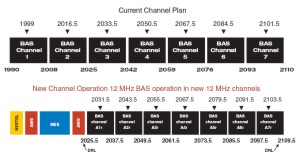
As many of you know, years ago, the FCC mandated that Broadcast Auxiliary Service (BAS) licensees using the current 1990-2110 MHz band have to convert from the current seven-channel 17 MHz channel plan to a new seven-channel 12 MHz channel plan, which extends from 2025 to 2110 MHz and replace or upgrade their equipment to operate on the new frequencies.

Sprint Nextel has divided the country into eight regions. Multiple markets within each region will be relocated at the same time, maximizing the use of resources and enabling the relocations across the country to occur efficiently."

Labels: , , ,

Wednesday, April 19, 2006

Robot Space Combat!

Maybe the coolest headline ever. All this from Daily Wireless:

"New Scientist reports that Japanese robotic game organizers plan to take their event into space. A satellite carrying several small humanoid robots is planned to be launched into space in October 2010. It will release humanoid robots, who will then proceed to fight each other in the vacuum of space.

A tardy April Fools joke? Apparently not.

Organizers of Robo-One, a robot combat event held annually in Tokyo, announced plans for their space combat mission this week. Robo-One is a robot combat event. Robots.net and DefenseTech have more.

Labels:

Tuesday, April 11, 2006

The National Show

Daily Wireless has a big round up of all things cable at the National Show.

From the post:

"Cable's annual convention, The National Show, is rolling out the big guns in Atlanta this week. The battle for the $490-billion-a-year U.S. market for phone, Internet and TV services is heating up. The war between cable, satellite and phone companies is going nuclear, as people disconnect their landline phones in favor of cell phones or VoIP over cable.

US carriers have reportedly lost more than five million telephone customers to cable rivals Time Warner Cable, Comcast and Cox Communications over the last year. More than 1 million customers now use VoIP services developed by Sprint Nextel in tandem with cable companies. Sprint has forecast that some $1 billion will be generated by VoIP services by 2009.

By 2010, 55 percent of U.S. broadband households will subscribe to a triple-play or quadruple-play bundle, Parks Associates predicts. And, revenues from bundled services, most notably the quad-play, are expected to reach nearly $120 billion."

Labels: , , ,

Wednesday, April 05, 2006

CTIA: MediaFLO and Modeo

Daily Wireless has a big post about a number of Mobile TV announcements at CTIA. Here is the part about MediaFLO and Modeo.

From the post:

"MediaFLO, the Qualcomm subsidiary, has forged a content deal with Network LIVE. The agreement calls for Network LIVE, a joint venture of AOL, XM Satellite Radio and AEG, to develop and distribute programming that will be available to MediaFLO USA wireless operator partners. Content will consist of live and prerecorded performances, including comedy shows and interviews with musical artists. The MediaFLO standard is said to deliver 20 streaming (320x240 pixel) channels at up to 30 frames per second, 10 stereo audio channels and up to 800 minutes of short-format video clips with an average channel switching time of less than two seconds.

Crown Castle's Modeo uses their own frequencies at 1.7 GHz and the Digital Video Broadcasting – Handheld (DVB-H) standard for broadcast digital TV reception on mobile devices. Their organization, called the Mobile DTV Alliance, includes representatives from Intel, Motorola, Nokia and Texas Instruments.

CommsDesign quoted a speech by Michael Schueppert, president of Modeo (a DVB-H supporter), at the DVB World Forum in Dublin. Schueppert's predictions on the future of mobile TV, include:

  • In 3 years, the global Mobile TV market will be worth $3B
  • Only half of the viewers will use cellular phones to access the service
  • DVB-H and MediaFlo will succeed, but T-DMB will eventually fail
  • Two media formats will coexist in mobile TV: H.264/AAC, and Microsoft WMA/WMV
  • Voting in TV shows will be the most powerful interactive feature of mobile TV
  • The youth market (ages 18-35) will be the grand prize—and virtually the only prize—for mobile TV.
  • By 2009, every major TV broadcast channel will launch mobile-specific versions of their programming, designed for viewers who prefer to watch TV in short clips."

Labels: , , , , , , ,

Monday, March 27, 2006

Alcatel and Lucent

Daily Wireless has a run down of the merger talks and this cool map.

From the post:

"Alcatel is in merger talks with smaller U.S. rival Lucent Technologies to create the world's biggest telecoms equipment company, with combined sales of 21 billion euros ($25.33 billion), reports Reuters, Light Reading and C/Net.

A combination with Lucent would allow Paris-based Alcatel to expand its presence in the U.S. market. A merger could create a company with the clout to withstand the market power of big telecoms operators, which are also joining forces.

U.S. telecom companies include:

From Om:

"The $34 billion merger of Lucent and Alcatel, if approved, will unleash a wave of mergers in the telecom equipment sector. Will Cisco merge with Motorola? What will happen to a host of smaller companies? This and more issues are covered in my story, Life after Lucent: telecom feeding frenzy, which is up on CNN Money website."

Labels: , , ,

Thursday, March 23, 2006

DVB-H in Sydney

From CNET:

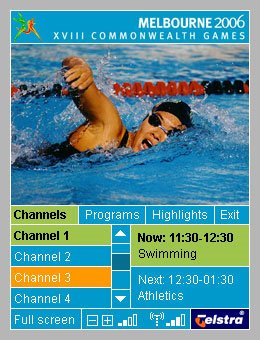
"Over the past year, DVB-H technology has been tested in Sydney and around the world for delivery of pre-encoded content. However, the Games trial marks the first time the technology has been used to simultaneously encode and broadcast multiple video channels and data information in real time. That's a big step forward given that a major market for such technology is the broadcasting of live sports events.

Technical issues could quickly grow DVB-H to become more than just a novelty. The current most popular method of distributing videos to mobiles - as downloads via third-generation mobile networks - was recently called into question by UK research firm Analysys, which said 3G networks could run out of bandwidth by 2007 if 40 percent of their subscribers watched just eight minutes of video a day.

DVB-H, by contrast, uses a completely different set of radio spectrum and a one-way broadcast delivery method that is not constrained in the same ways as session-based 3G services. That has made it a popular target for mobile service providers, who have tested DVB-H based mobile TV services in numerous overseas trials. Nokia, Motorola, Siemens, Samsung and other mobile manufacturers are working with Microsoft and chipmakers like Broadcom and Intel to integrate DVB-H chips into their devices."

See also:
Mobile TV Overview
DVB-H in Europe
Nokia Mobile TV Test Results
Michael Schueppert: Modeo and the Future of DVB-H
MSFT Joins MDTVA
Qualcomm's DVB-H Chip
DVB-H 3GSM Favorite

Mobile TV Spectrum Review
Satellite Backbones for Mobile TV
Mobile DTV Alliance
Crown Castle Annouces Modeo
DVB-H Making Some Waves
DVB-H vs. MediaFlo

Labels: , , , , , , ,

Wednesday, March 22, 2006

Mix06: Bill Gates, Aber Whitcom, Ashley Highfield and Tim O'Reilly

Microsoft has the transcript from Bill Gate's Mix06 keynote address.

From the transcript:

Bill Gates: "Many of the things we're going to talk about are really falling into two categories. First, it's the experience through the browser, and as you've seen there's a lot of substantial change there including some tools that we've just come up with that you'll get your hands on that will make that substantially richer than ever before. And then, second, is beyond the browser, where you are actually exchanging data with rich code, the client is not on a phone, or a Media Center PC, or any of the target devices."

Aber Whitcom, CTO, MySpace: "I thought I'd start by bragging about some of our numbers. Business is booming, MySpace has 65 million registered members, and that's growing at 260,000 members every day. In February we had 38 million unique views, and 23 billion page views. In fact, Media Metrics tells us that we're the No. 2-trafficked site on the Internet, passing Google, eBay, and just recently MSN."

Ashley Highfield, BBC: "Just as a little comparison, it costs us around about 7 million pounds a year to distribute one of our TV channels over the airwaves, over digital terrestrial. It's about a tenth that much, about 700,000 to distribute a channel over satellite. And using the latest technologies, peer-to-peer and multicasting, we can get that cost down by another factor of ten down to around about 70,000. So if the audience is there and the demand is really there, then for us the Internet, just looking at that, that television slice, is a hugely compelling platform for us."

Tim O'Reilly: "So moving on to another aspect of Web 2.0, one point that I have made repeatedly is that one of the key concepts that's different about network applications is that they get better the more people use them. Every time somebody makes the link on a Web site, and I think it was Scoble who made this point originally, at least in my awareness, they are contributing to a site like Google or any search engine, because it's the users making links that is the raw material of the whole search Web. And in a similar way, every time somebody tags a photo in Flickr or a Web site in del.icio.us, they're basically making the application better for everyone else."

Labels: , , , , , ,

Advertising RIP and Predictions

Interesting article at Club of Amsterdam by Scott G. He states that ads have gotten to pervasive and will soon cease to be effective. But, he also makes some predictions.

From the article:

"When I first wrote about the ways advertising messages were being placed inside almost every activity in the universe, I ended the article with some predictions that many people found outlandish, including:
  • Debit card scanners in TV sets, so you can order during a commercial with the flick of your remote.
  • Barcodes in songs, so you can download from iTunes or Real Rhapsody by swiping your XM or Sirius player with your Visa or MasterCard.
  • Credit cards built into wristwatches.
  • Interactive ads, where you get to star in a five-minute escape from reality.
  • Holographic projections of commercials from postage stamps, car and house keys, magazine covers, etc.
  • Microchips embedded under your skin, so YOU will be the receiver for TV, radio, satellite, telephone, and global positioning system signals"

Labels: ,

Friday, March 17, 2006

Northern Sky Research Mobile TV 2006 Report

Since I don't have $1,495 to throw at this I will just have to settle for the press release.

From the release:

"Mobile TV today can best be described as nascent or nonexistent in most markets. The market is dominated by a variety of clips-based content streamed via unicast over 2-3G networks. Content is often choppy, battery life is lacking, and download times over existing networks are often quite long. This issue is expected to only worsen as more users request unicast video streams, thus further slowing down the network and user experience. It is no surprise therefore that many early stage mobile TV services have been met with low subscriber totals and include limited content."


"With mobile TV projected to generate significant subscribers and revenue over the next 5-10 years, mobile providers are examining new ways to distribute content without clogging their precious 3G network resources or infringing on the true killer application: mobile telephony. One rapidly emerging approach to mobile TV is to broadcast video content directly to users via satellite and/or terrestrial means, thus bypassing the 3G network and enabling mobile users to receive direct broadcasts from TV stations and content owners. This merging of unicast and broadcast is receiving quite a bit of attention, as virtually every mobile carrier is testing some form of new broadcast mobile TV technology. In fact at least 5 competing technologies for broadcast mobile TV are currently planned, with all backed by wireless heavyweights, such as Nokia, Qualcomm, Samsung and Crown Castle."

Labels: , , ,

Thursday, March 16, 2006

Mobile TV Overview

More great information from Daily Wireless:

"Some promoters of the Digital Video Broadcast-Handheld format have advocated "poaching" L-Band, originally assigned to the Digital Audio Broadcast (DAB) radio standard, for DVB-H service in Europe. Britain's powerful Office of Communications (Ofcom) regulatory agency is addressing L-Band allocation in meetings this month.

Efficiency of Digital Radio Systems

Mobile Multimedia Systems Bandwidth Required per Average Audio Quality Radio Station
kHz
DRM (Digital Radio Mondiale) 25 (Shortwave Radio)
DVB-H (DVB-Handheld) 39 (can use DAB or TV channels)
DMB (Digital Multimedia Broadcasting) 60 (can use DAB radio channels)
DAB (Digital Audio Broadcasting) 250 (Band III: 174-239 Mhz) and
(L Band: 1.452-1.490 Ghz)

DMB and DVB-H are the two dominant mobile television standards and both are based on COFDM to provide mobility. DVB-H had its start in Europe and is based on DVB-T, the digital terrestrial broadcast system there. It is in competition with Digital Multimedia Broadcasting (DMB), which adds MPEG-4 and other elements to digital radio channels (DAB) or other frequencies. It is already operational in Asia.

The United States doesn't have frequencies devoted to DAB. Instead the FCC approved a proprietary system, HDRadio. It is currently being deployed across the U.S. and uses subcarriers on today's FM bands (so no new frequencies are needed for digital broadcasting). The downside of Ibiquity's proprietary system is that DMB mobile television is unlikely to be an option for radio broadcasters. Satellite radio broadcasters, like XM, also use terrestrial repeaters (near 2.3 GHz). That frequency is used for DMB in Asia. Radioscape and Texas Instruments
make modules for DMB and DVB-H."

As always go read the whole thing - I just pulled a small bit about the spectrum but the main article is about Radioscape winning new contracts in China.

See also:
DVB-H in Europe
Nokia Mobile TV Test Results
Michael Schueppert: Modeo and the Future of DVB-H
MSFT Joins MDTVA
Qualcomm's DVB-H Chip
DVB-H 3GSM Favorite

Mobile TV Spectrum Review
Satellite Backbones for Mobile TV
Mobile DTV Alliance
Crown Castle Annouces Modeo
DVB-H Making Some Waves
DVB-H vs. MediaFlo

Labels: , , , , , , ,

Tuesday, March 14, 2006

DVB-H in Europe

From MocoNews:

"Frost & Sullivan has reiterated its belief that DVB-H will become the dominant mobile TV technology in Europe…given a few years. It said the same thing five months ago and I guess can only be encouraged by recent EU moves to free up spectrum for the technology. The reason given for the success of DVB-H is the backward integration with DVB-T, the current digital TV standard."

From the press release:

"The fight for the mobile TV standard in Europe will be won not by the first standard introduced in the market, but by the most efficient, economical and future-ready one, even if it (DVB-H) is a few years down in line," explains Frost & Sullivan ICT Industry Analyst Pranab Mookken. "DVB-H is likely to become the European standard and delivery mechanism for mobile TV in Europe by 2010 as it perfectly complements the existing digital TV standard and is likely to solve the spectrum allocation issues in the preferred UHF band."

"Since they are already available, broadcasters and operators may consider the use of DAB-IP and T-DMB delivery mechanisms for the interim period before the introduction of DVB-H," notes Mr.Mookken. "Also, successful trials over DAB-IP and a readily available mobile TV packaged product from BT Movio could tempt operators to experiment with these alternatives."

See also:
Nokia Mobile TV Test Results
Michael Schueppert: Modeo and the Future of DVB-H
MSFT Joins MDTVA
Qualcomm's DVB-H Chip
DVB-H 3GSM Favorite

Mobile TV Spectrum Review
Satellite Backbones for Mobile TV
Mobile DTV Alliance
Crown Castle Annouces Modeo
DVB-H Making Some Waves
DVB-H vs. MediaFlo

Labels: , , , , , ,

Thursday, March 02, 2006

Michael Schueppert: Modeo and the Future of DVB-H

From an article in CommsDesign:

"Mobile TV, still in its infancy, will grow in three years into a $3 billion market, heavily concentrated among young consumers who will forsake traditional broadcast for specially-tailored content on mobile phones and other devices, Michael Schueppert, president of Modeo, told the DVB World Forum on Wednesday (March 1).

1) Although DVB-Handheld, or DVB-H, will triumph internationally as the dominant mobile broadcast standard, Qualcomm's MediaFLO spec will also succeed. Other competing standards, including DAB "will fail" for lack of industry support.

2) Modeo’s prescient use of L-band spectrum will be imitated by more operators in Europe and Asia, partly because UHF spectrum is so heavily overburdened. There is also a growing trend among semiconductor makers to develop chips that also support L-band broadcast.

3) Mobile broadcasts will end up with two media formats, the proprietary Windows Media Format from Microsoft and the open-standard H.264. Both will have to be supported by device manufacturers.

4) The current plethora of electronic service guides, in competing formats, will experience a drastic shakeout. This “unnecessary” array of program guides confuses the market. They must be “harmonized” or eliminated by the end of this year.

5) Podcasting will become a key part of the mobile TV experience, and it will eventually be supported by all devices.

6) Although mobile TV promises to be a windfall for the mobile phone market, there are millions of cellphone users who just want to talk. That means 50 percent of mobile TV consumers will be using other devices, and these must be ready to receive video content.

7) Voting via "live" contact with a broadcast program, will be the most powerful interactive feature on mobile TV.

8) The youth market (ages 18-35) will be the grand prize—and virtually the only prize—for mobile TV.

9) By 2009, every major TV broadcast channel will launch mobile-specific versions of their programming, designed for viewers who prefer to watch TV in short clips.

10) Finally, Schueppert foresaw the already brewing clash between content owners and wireless carriers. He expressed optimism that this "fight" will be partly settled by the upcoming international spectrum auctions."

See also:
MSFT Joins MDTVA
Qualcomm's DVB-H Chip
DVB-H 3GSM Favorite

Mobile TV Spectrum Review
Satellite Backbones for Mobile TV
Mobile DTV Alliance
Crown Castle Annouces Modeo
DVB-H Making Some Waves
DVB-H vs. MediaFlo

Labels: , , , , ,

Wednesday, March 01, 2006

MSFT Joins MDTVA

Microsoft joins the MDTVA, and helps push DVB-H adoptions in the US.

From the press release:

“Microsoft’s participation in the Mobile DTV Alliance as a founding member will accelerate the introduction of mobile digital television based on DVB-H into cell phones, PDAs, laptops and portable media players,” said Michael Schueppert, president of Modeo.

From the MDTVA site:

"DVB-H is an open industry standard that has become the predominant technology used to deploy mobile TV services around the world. DVB-H has over 100 companies developing or deploying services, components and devices based on the standard. Through this large ecosystem, DVB-H has a competitive environment which fosters lower costs and spurs innovation.

The DVB-H standard delivers rapid, cost-effective deployments by leveraging existing infrastructure in North America. In addition, DVB-H provides a living room TV viewing experience in the palm of your hand with an average 1.5 second channel changing time readily achievable and demonstrable with the existing standard, 30+ channels of live TV programming, audio content and pod casts, a long battery life of 3.5+ hours and up to 30 frames per second delivery speed."

See also:
Qualcomm's DVB-H Chip
DVB-H 3GSM Favorite

Mobile TV Spectrum Review
Satellite Backbones for Mobile TV
Mobile DTV Alliance
Crown Castle Annouces Modeo
DVB-H Making Some Waves
DVB-H vs. MediaFlo

Labels: , , , , ,

Tuesday, February 28, 2006

Qualcomm's DVB-H Chip

Qualcomm is making a DVB-H chip.

From the press release:

"NEW YORK (Reuters) - Qualcomm Inc. (QCOM.O: Quote, Profile, Research) is developing chips based on a mobile television standard that rivals its own MediaFlo wireless technology, Chief Executive Paul Jacobs said on Monday.

Jacobs said it would be in Qualcomm's interest to make chips for DVB-H, a television standard for mobile phones that rivals such as Nokia (NOK1V.HE: Quote, Profile, Research) are championing, because the success of this standard could boost the uptake of wireless TV in general.

"It doesn't always have to be a Qualcomm technology that's deployed for us to benefit," Jacobs said at the Reuters Global Technology, Media and Telecoms Summit in New York."

See also:
DVB-H 3GSM Favorite
Mobile TV Spectrum Review
Satellite Backbones for Mobile TV
Mobile DTV Alliance
Crown Castle Annouces Modeo
DVB-H Making Some Waves
DVB-H vs. MediaFlo

Labels: , , , , , ,

Wednesday, February 22, 2006

DVB-H 3GSM Favorite

From Electronics Weekly, industry leaders see DVB-H as the clear favorite for mobile TV.

From the article:

“DVB-H is going to be the big one. The prediction is it’s going to have 40-50 per cent of the market,” said Berardino Baratta, a general manager at Freescale Semiconductor. “The traditional operators are going to license access.”

Gertjan Kaat, senior vice-president for mobile and personal at Philips Semiconductors, thought that, in future, there would be fewer technologies. “DVB-H is by far supported by the biggest community, it has the highest support,” said Kaat, who believes the mobile phone network will not be able to cope with TV.

“There’s a belief in the market that 3G and EDGE can have video-on-demand, but the base stations won’t be able to handle the capacity,” said Freescale’s Baratta. “All the next-generation technologies have to be good at voice; and DVB-H as a separate network doesn’t risk voice.”

See also:
Mobile TV Spectrum Review
Satellite Backbones for Mobile TV
Mobile DTV Alliance
Crown Castle Annouces Modeo
DVB-H Making Some Waves
DVB-H vs. MediaFlo

Labels: , , , , , ,

Tuesday, February 21, 2006

Harris Interactive's IPTV Survey

Harris Interactive's released an IPTV Survey last week.

Highlights:

"Many adults expressed a great deal of interest in the interactive features IPTV has to offer, the most popular of which include:
  • The ability to save money, since IPTV should be far less costly than cable or satellite (42%)
  • The ability to select the time you watch a program (on demand) (33%)
  • The ability to receive a broader array of programming content to meet your particular interests (24%)
  • High-definition viewing (20%)
  • Digital video recording (18%)
  • Interactive program guide with navigation and search functions (15%)
Types of providers adults say they would feel most comfortable with delivering IPTV service include:
  • A cable company like CableVision or Comcast (33%)
  • A new company that has no baggage (25%)
  • A technology company like Cisco or Microsoft (15%)
  • A telephone provider like Verizon or SBC (13%)
  • An Internet provider like AOL or Earthlink (11%)
  • A content provider like Disney or CNN (4%)
Milt Ellis, vice president and senior consultant for the Technology Research Practice at Harris Interactive comments: "It’s no surprise to find that consumers want to save money on their cable or satellite bill, but the survey results also show that many consumers are quite interested in having access to a broad range of content to watch, at a time they determine.

When consumers are able to watch their favorite shows at a time of their own choosing, "prime time" may need redefining, network program schedules may have little meaning, and TV ad rates will have to be recalculated. If and when IPTV becomes a mainstream reality, it could be the best of times for consumers and IPTV providers and challenging times for the networks, as well as cable and satellite providers."

Labels: ,

WSJ on Brightcove

There is a good article (subscription required) in today's WSJ about Brightcove.

From the article:

"Reuters is moving faster than other media companies partly because it doesn't have to worry about cable- or satellite-TV operators. Its video footage and reports are sold mostly to TV networks and online sites. "That gives us a little more latitude in the consumer media space," says Stephen Smyth, a Reuters vice president.

To reach its audience in as many forums as possible, Reuters is syndicating through Brightcove 20 video news stories, which are rotated often, to bloggers, small newspapers and other Web sites. Each affiliate site plays the videos on an embedded Brightcove player that features the Reuters brand. Mr. Smyth says these smaller media properties are going to be an important way of attracting consumers as the traditional media audience fragments."

Brightcove previsously covered:
New York Times Picks Brightcove
Brightcove's Adam Gerber
Internet Video Services
Brightcove Gets Funding

Labels: , ,